Total Pageviews

Thursday, May 18, 2017

AAL’S LABYRINTH HISTORY An Alternative Viewpoint…..contd. 23.


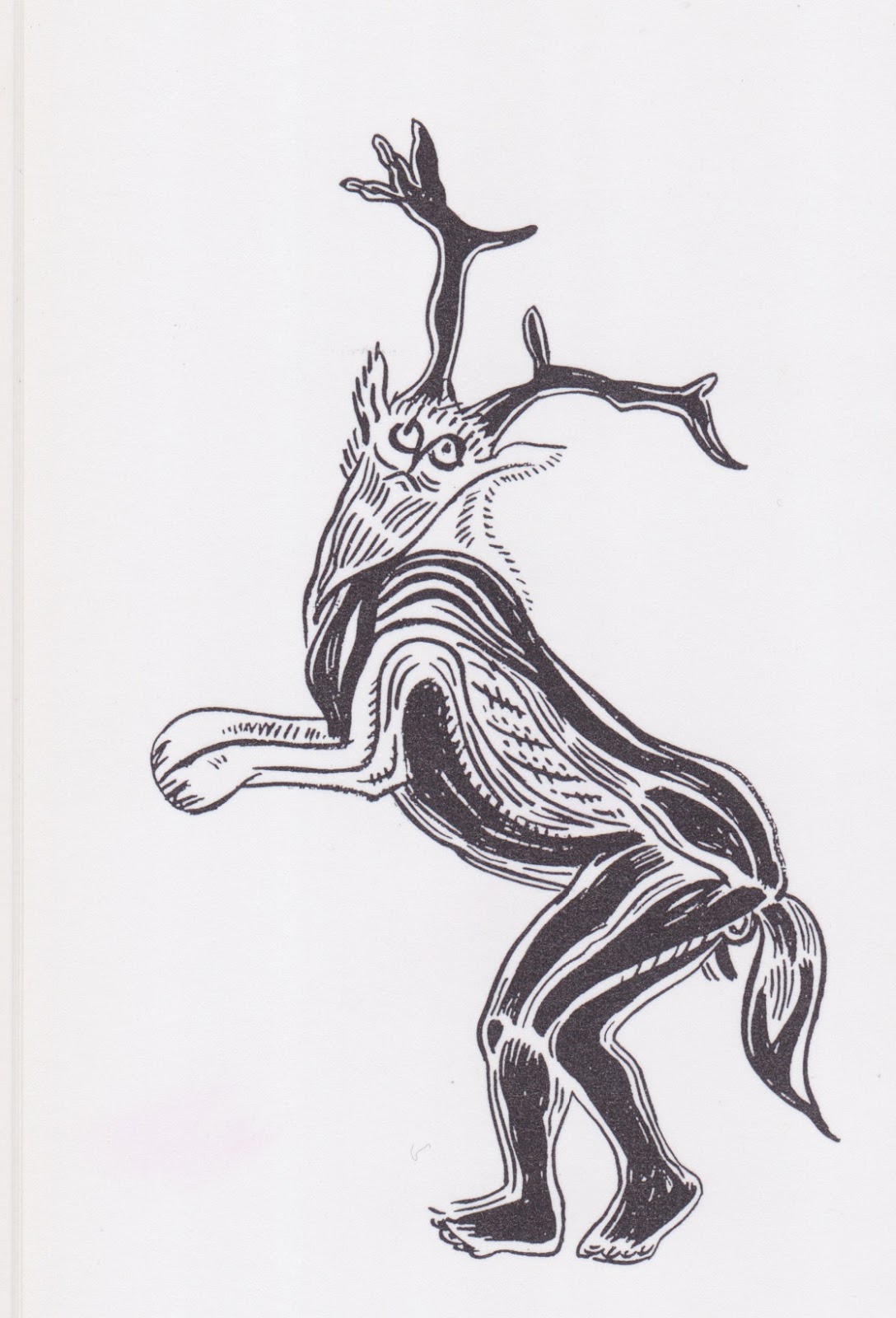
                                               Dancing Sorcerer from caves of France [N. Smart]

3000 BCE              THE GREAT WHITE RACE [the Noble Aryan Race] makes its appearance on the Steppes of Russia and proceeds to migrate throughout Asia and Europe. Known as the Aryan race, some will eventually settle on the Iranian Plateaux which at this time is called Eran. The Iranian Plateaux stretches between the Zargros Mountains and the Indus River.
This group of people will eventually divide into the Medes and Persians. They are also the eastern descendants of the Indo-European tribes.  The language of the inhabitants of the Eranian plateaux is similar to that of Vedic India and may be from the same parent language as that of the Slavonic, Teutonic, Celtic, Greek and Latin (Roman) races. The Aryans are the ancestors of the Indo-Europeans, the modern Europeans and the Asia-Minor races of the Hittites, Phrygians, Scytheans, Armenians, Medes, and Persians. (40)
                       There seems to be two great races at this time in history, one in the north, the white ancestors of the Aryans, and one in the south, the dark ancestors of the Semites, who from 3000 BCE start to converge on the world bowl.
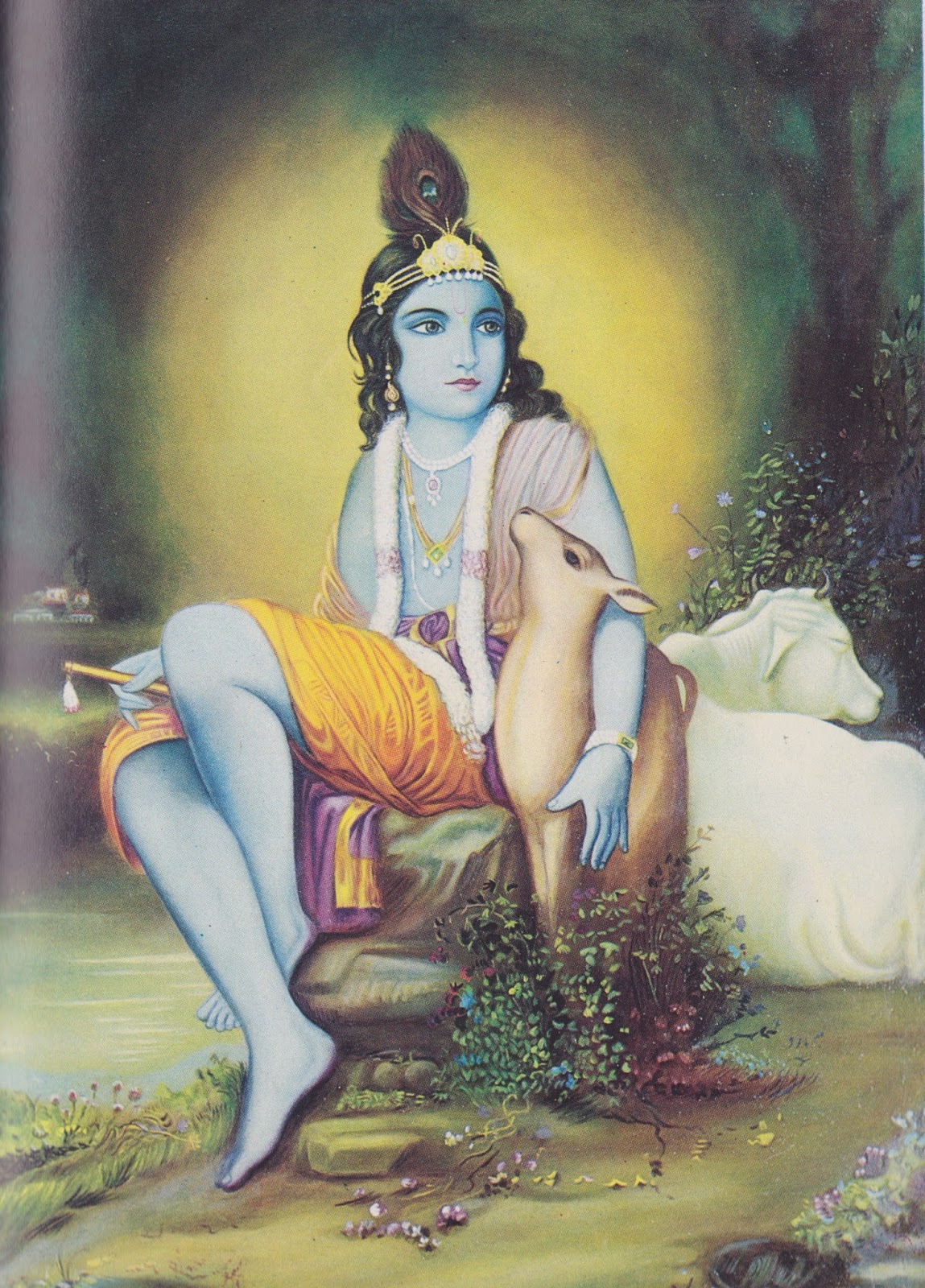

Sri Krisna: Supreme Personality of the unknown
and unknowable Godhead. [Bhagavad-gita]


A Druid Priest

The mystic priests of this ancient White Race are called Druids. The priestesses are called Benat Y’kob (Daughters of Jacob). Druidism in Canaan (Palestine) worshipped Asherah, goddess of the sacred oak groves. (13). The primitive Bacchantes are the Druidesses of Greece. (43) Sacred places of the Druids are stone circles like those of Stonehenge, Salisbury Plain, England. (28)
                       The descendant Celtic, ‘Feast of the Dead’, will be known as ‘Samhain’ in the future, and eventually degenerate into ‘Halloween’ to be celebrated on 1st November. This ‘Feast of the Dead’ marks the pagan New Year as a time when there is free flow of influences between the visible and invisible worlds. Samhain was originally named after the Aryan lord of death Samana, in the Bible this god is Samuel from the Semitic Sammael, which in turn comes from the Asiatic Samana, the god of the ‘Underworld’ (13)


                                       Modern dates [20C CE] of the ancient Druid Festivals [ÓJMS2010]

                       Painted pottery found on the Iranian plateaux at sites of Tepe Sialk, Tepe Hissar, Tepe Giyan are dated at c3000 BCE. However, the historical identity of these people will not be established until the advent of written records, in cuneiform, make their appearance at a later date.
                       Ancient tribes in the southern regions of the plateaux are the Elamites based around Susa; in the north are the Manneans and the Caspeans; in the northern mountain ranges are the Kassites.
                       The Plateaux of Eran will eventually become Persia (from Persis) and in the future (1998 CE) will be known as Iran and Afghanistan. (102) In the 21st century CE these countries will be in continual war of terrorism, as something buried deep tries to surface.

Between 3000 -1500 BCE (4th to 2nd millennium) a branch of the Aryans moves from the north-west of the continent of Europe (Eran/Iran) to settle in the Punjub (upper valley of the Indus River of India). At this time, the resident occupants are a dark-skinned people known as the Dravidians, they have an advanced culture and are possibly related to the Chaldeans of Babylon. Also present in this new country are wilder tribes speaking Munda idioms and having affinity with the Negroids of Indo-China and Australia. These three groups of people, the Aryans, Dravidians and Munda, become intermixed with the addition at some point of Mongolians. The original inhabitants of India were matriarchal, as was so for most earlier races of people. The Aryan/Iranian peoples imposed their male dominated caste system on the conquered people. History and mythology of the Aryans is known through the Vedic and Brahmanic philosophical literature of ancient India. (40.226) Is this the point of contact between Aryans and Egypt?


Sri Krisna: Supreme Personality of the unknown

and unknowable Godhead. [Bhagavad-gita]

Sunday, April 23, 2017

AAL’S LABYRINTH HISTORY An Alternative Viewpoint…..contd. 22


Hindu god Vishnu. [From Larousse]

3102               KRSNA & ARJUNA: This is the date of the Bharata battle that decided the dynastic struggle between two clans of India’s ruling families, the Pandavas and the Kurus. An account of this long dynastic struggle is recorded in the epic ‘Mahabharata’ and marks the beginning of the ‘Age of Misfortune, the Kali Yuga’. (199) This is a ‘dark age’, which lacks a doctrine; it began on 18th February 3102 BCE and will last 432,000 years. Krishna, and Kali are both ‘black’ gods. Indra’s son Arjuna is ‘white’ but taught by black Krishna, an incarnation or avatar of Vishnu. These great gods of Hinduism will survive well into future times. (195)
                        The Aryans are mentioned in the ‘Mahabharata’ but traditional orthodox history puts Aryan settlement of India at c1500 BCE.
                        The following year is recorded a great gathering of all planets in the constellation of Aries, said to mark the time of the Biblical Flood. (60)

3046               Estimated total eclipse over the capital Thinis, Ancient Egypt. (240. 241) Eclipses usually mark a time of considerable adjustment to change.

3005               According to Petrie this is the start of Middle Kingdom of ancient Egypt. Coffin texts are thought to date from this period.
                       YNTEF I the Great, first pharaoh of the Middle kingdom recorded, ‘I enlarged my northern boundary as far as the nome of Aphroditopolis, I drove in the mooring peg in the sacred valley, I captured the whole of the Thinite nome, I opened all its fortresses, I made it the Door to the North’ (80)
                       MENTUHOTEP I is credited with establishing the 11th Dynasty of Egyptian kings and the foundation of the Middle Kingdom. He came from a family of Theban princes who traced their ancestry to a noble named Inyotef the Great [Yntef?]. (287)
                       MENTU-HOTEP III is the last pharaoh of the 11th Dynasty. He builds a mortuary temple and a pyramid at Deir el Bahri, which will be further built onto by the future Senusert III of the 12th Dynasty. Mentu-hotep’s mortuary temple will act as a model for the future temple of Pharaoh Hatshepsut. Whilst stone was being quarried for Mentu-hotep’s sarcophagus, it is recorded that a pregnant gazelle. ‘...went with her face towards the people before her, while her eyes looked backward....’ She sacrificed herself in birth on the stone.  The incident was interpreted as Divine direction. (80)
                      
c3000 BCE     DARDANUS builds the city of Troy in Asia, and is its first king. Dardanus is a son of Zeus and Electra, the lost star of the Pleiade group located in the shoulder of Taurus the Bull.  They are inhabitants of Samothrace, a Greek Island in the northern Aegean Sea.
                       After the death of his brother in a flood (the third flood according to Nonnos) Dardanus went to Asia where King Teucer reigned. Teucer gave Dardanus land and the hand of his daughter Batieia. On the death of King Teucer, Dardanus inherited the whole country and called it Dardania, after which he built the citadel of Troy. Dardanus then initiated the Trojans of Troad into the mysteries of the Cabiri and introduced the cult of the mother goddess Cybele into Phrygia. The Cabiri were the divine servants of goddess Rhea. According to the Italians, Dardanus came originally from the Etruscan city of Cortona and then went to Phrygia/Troad and thus created a bond between the two lands. (148)
                       Dardanus received a magical shield from Zeus, which is handed on to Minerva [Athena] and then to Numa, founder of Rome c703 BCE. [247. 503]


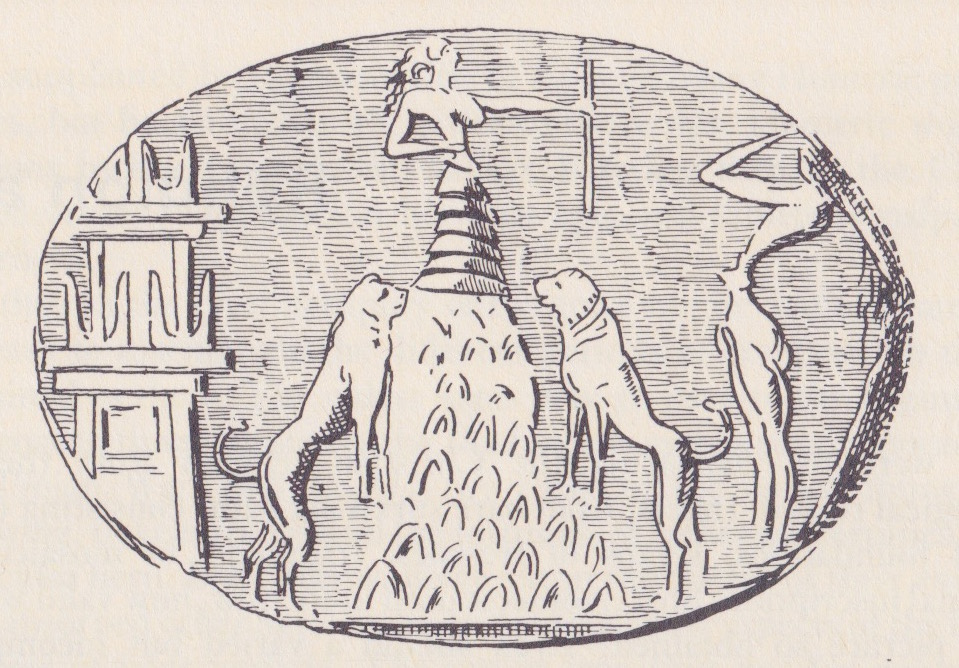
Mother Goddess of the Mountain
Goddess Cybele/Rhea from Ursa Major

                       The star Electra, mother of the Dardanus will be saddened when she witnesses the future fall of Ilion, and so will leave her station among the Pleiades to become the ‘Fox Star’ or Alcor of Ursa Major. According to Babylonian legend this star, known to them as Era, was powerful among the gods and took its place at the beam of the wagon of Ursa Major; it is associated with the planetary god Nergal or Mars. The Sumerian story of ‘Utnapishtim’, records that Nergal/Mars/Alcor is responsible for the first great world flood. Thus, the legends read that when Electra/Era frees herself from the yoke of Ursa Major or from the Pleiades group, in the time of the fall of Ilion/Troy in 1185 BCE, there will come the end of a world-age, presumably the Pleiadic age. (71)

                       The first settlers of Troy built the city as a Bronze Age fortress.  It will become the city of Hissarlik in the future modern country of Turkey, near the entrance to the Dardanelles. Troy is the city of the later King Priam (1184 BCE) and destined to be destroyed by the Greeks in the Trojan War of that time. Troy was once known as Ilios or Ilion, as related in the future Homer’s epic poem the ‘Iliad’, which will record the story of the fall of Troy. (102)
                       A succeeding Troy II (2500-2200 BCE) will grow in power and wealth to reach the high point of Troy’s history known in archaeology as Troy VI around 1800-1300 BC.

                       The ‘Bronze Age’ is named so due to the development of an alloy of copper and tin that allows the making of better tools, implements of which are common in the Near East. (102). During this ‘Bronze Age’, the culture of Lower Mesopotamia (marsh delta) is known by the name ‘Jemdt Nasr’. (173)

                       The heliacal rising (with the sun) of Sirius coincided with the flooding of the Nile around this time. Egyptian Temples are aligned to this star. (47) Sirius is a binary (but possibly triple system according to the Dogon) and the eccentricity of the orbit of the second star reflects the Golden Mean ratio of 1.61. Pre-Ptolemy (150 CE) Sirius is known as a red star but after his time it will be known as a blue-white star. Sirius is seen as a ‘normal star’, whilst its companion, Sirius B is known as a white dwarf. (47) The Pole star at this time is alpha Draconis. (71)

c3000 BCE     MINOS OF KNOSSOS is the legendary King of Crete and after whom the Minoan civilization is named in the future by the famous archaeologist Arthur Evans. Worship by these peoples was of the Great Mother Goddess and the Moon Goddess. Thucyides refers to Minos I.4 . I.8. who married Pasiphae, daughter of Helios and Perseis. Unfortunately, Pasiphae is to fall in love with the bull that Minos failed to sacrifice to the gods. Their offspring is the Minotaur, which Minos was obliged to keep in an underground labyrinth. [148]

                       DAEDALUS, architect to King Minos, created this labyrinth under the palace of Knossos in which to keep the Minotaur monster, half bull and half man. The word ‘labyrinthos’ comes from, ‘the place of the double axe’, the Labrys. (44) the double axe is a symbol of the Great Mother Goddess.
                       The Cretan culture would eventually spread to Thrace and early Hellandic Greece, (29) and with it the fertility religion of the Great Mother Goddess, Rhea, not to be replaced until 2nd Millennium BCE when the Indo-European invaders will bring their masculine sun god to that country. When the Cretan Mother Goddess came to Greece she became departmentalised into different aspects of fertility. The change of dominance from matriarchy to patriarchy is recorded in the mythology of the Indo-European gods mating with, and then dominating these goddesses. (44)


Cretan Snake Goddess

c3000 BCE     By this time period, the city-states of Sumeria contain several thousand inhabitants. (96) There are Neolithic Barrows (burial mounds) in England.
                       In the Near East civilizations of Egypt and Sumeria, women have the same legal rights as men, inheriting and trading property, holding prominent positions etc.  Gradually there is to be a slow decline in their status from this date forward. (9)

                       Agricultural revolution occurs in Spain as the settled life of farming and herding brought a population boom. In the south of Spain many dolmens and megalithic tombs attest to the vitality of this culture called the ‘Almeria’. (102)